


Highlights
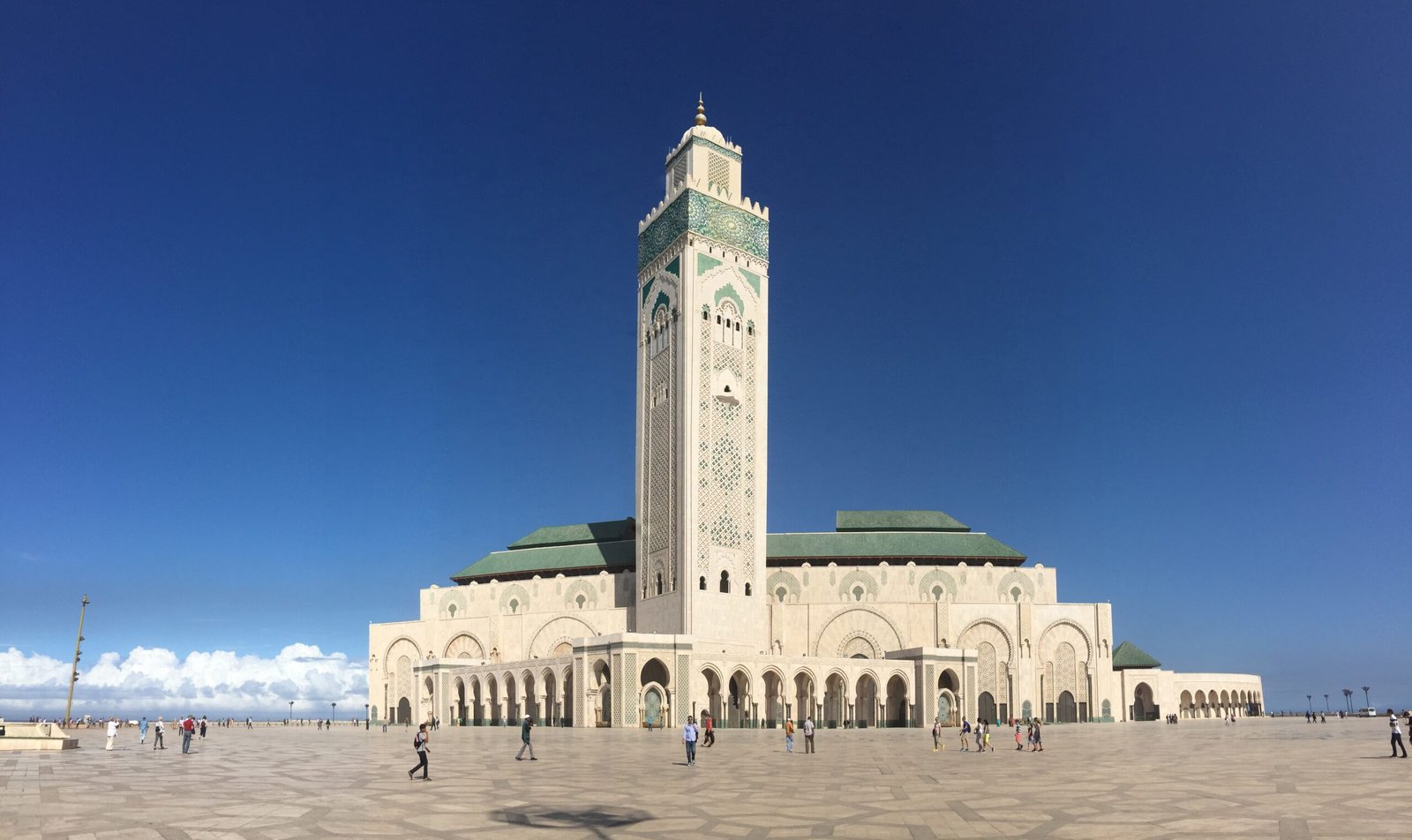
- Visit the Hassan II Mosque and the world’s tallest minaret in Casablanca
- Wander the quiet, blue-washed streets of Chefchaouen
- Discover souks, tanneries, and artisan workshops in medieval Fes
- Explore sand dunes, oases, hidden valleys, and old kasbahs in the desert
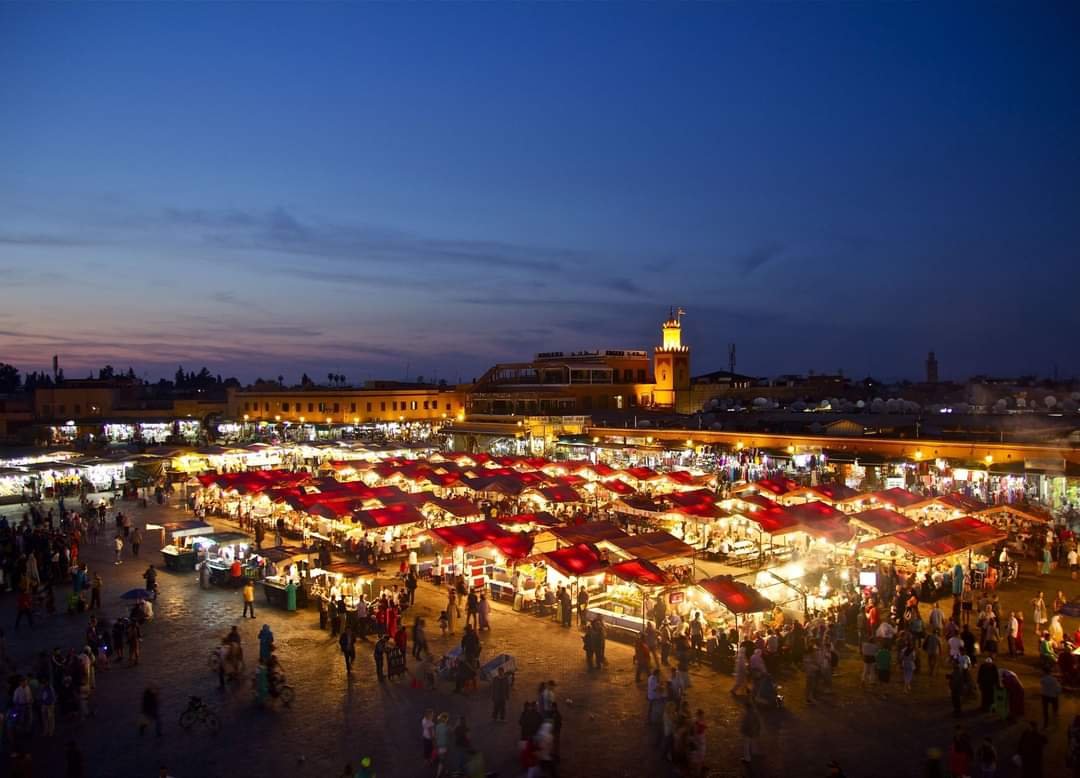
- experience an evening at Jemaa el-Fna Square- the busiest square in Africa
Itinerary
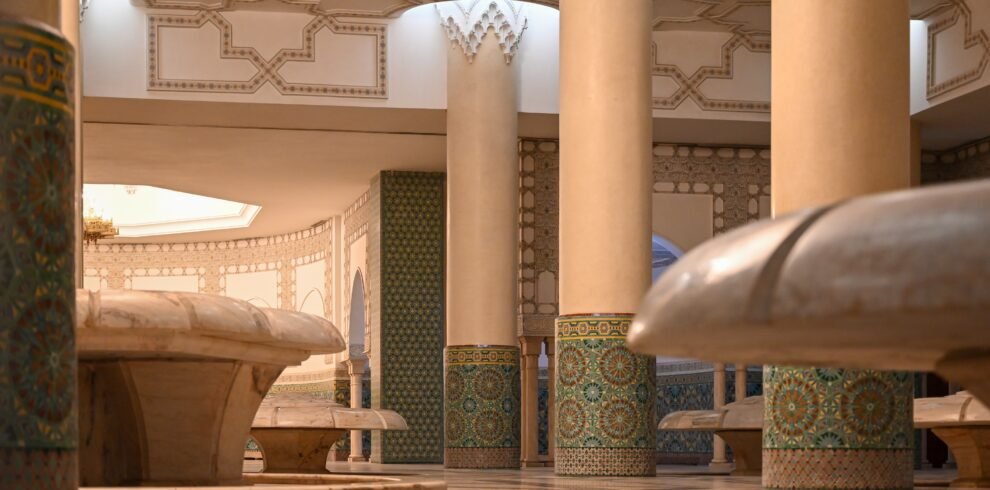
Welcome to Morocco! Welcome to the modern coastal city of Casablanca. Casablanca's main attraction in the relatively modern and monumental Hassan II Mosque. Inaugurated in 1993, it sits on an outcrop jutting into the Atlantic and offers breathtaking views. It has a 690 feet (210 m) minaret- the tallest structure in Morocco and the tallest minaret in the world. What makes this mosque additionally unique is that it is one of the few mosques in the country non-Muslims are permitted to enter. Jion a guided tour and appreciate the fine example of MOroccan and Islamic artisanship.
Head north to the bue-hued streets of Chefchaouen in the Rif mountains, stopping along the way in the present-day capital city of Rabat. Explore the medieval fortification of the Chellah Necropolis and wander its Roman and Islamic ruins. Visit the Bab Oudaia gate and the Kasbah des Oudaia, a 12th-century fortification built during the Almohad riegn. Next, visit the Hassan Tower a minaret of the incomplet mosque and Mausoleum of Mhamed V.
Carry on north to Chefchaouen. Named after the two peaks rising above the hillside town, Chefchaouen translates to ''two horns''. Wander the steep, cobbled streets and enjoy the picturesque blue-hued building. Relax in Place Outa el Hammam with a mint tea, before browsing colorful wares in the many shops. Visit the nearby Kasbah (fort or fortificaion) and explore the 15th- century fortress and dungeon. As the day draws to a close, make your way uphill to the abandoned white Spanish Mosque to enjoy one last view of Chefchaouen as sun sets behind the mountains.
Meet oyr driver and head south toward Fes. Along the way, stop and stretch your legs to visit the Roman ruins of Volubilis. A UNESCO protected site founded in the 3rd century bce, it remains incredibly well-preserved. Next, stop and explore Meknes. A smaller version of Fes, Meknes offers a calmer medina and shopkeepers are not as pushy to make a sale. while Meknes is quite large, the two main areas of interest are the Ville Imperial (Imperial city) and manageable medina. Be sure to check out the grand Bab al-Mansour gate and the Mausoleum of Moulay Ismail.
Carry on eastward to Fes. Before venturing into the medina, take the time to drive vup the hill to the ruins of the Merenid Tombs for an all-encompassing view of the medieval city. The best time to visit the tombs is around dusk. THe muezzin's calls to worship can be head through the valley as the city lights begin to glow on, adding to the atmosphere. Return to your traditional Riad a warm meal and settle in the evening.
Fes is the oldest of the four Imperial Cities in Morocco and perhaps the most interesting and exciting to explore. It has the most complete medina in the Arab world and is relatively untouched since it was founded over 1000 years ago. Often considered the county's cultural, it is made up of three parts, two medina quarters, Fes el Bali and Fes el Jdid, and the more modern, French colonial influenced, Ville Nouvelle. Meet your guide and spend a half day learning about the history and culture as you navigate the narrow streets of the medinas.
Start in Fes el Bali at the Bab Boujeloud gate and enter the main thoroughfare of Talaa Kebira. Notice the Spanish and Tunisian influenced architecture as you make your way past shops and souks. One of the most unique sights in the old medina is the tanneriers and Chouara Tannery is no exception. Next, climb to the rooftop of a nearby leather shop for a better view of the 11th-century stone pots filled with dye and men at work still using centuries- old techniques.
Next, make your way to the 14th century Al Attarine Madrasa, a beautiful example of Moroccan architecture and artisanship showcasing intricate Zellij tilework. From there, find your way to one of the oldest still-operating universities in the world, Al-Qarawiyyin University next to the Al-qarawiyyin Mosque (859 CE). though the mosque is only open to Muslims< there are a few places where you can glimpse inside to its decorated interior. Cooking enthusiasts may olso wish to join a cooking class and learn how to prepare a typical Moroccan meal before retiring for the evening.
Start your day bright early and travel south toward Merzouga. Along the way, oyu will climb up an elevation of 7,146 feet (2,178 m) over the Col du Zad pass and through the cedar forests of the Middle Atlas mountains. Ejoy sightings of the local Barbary macaque monkeys before stopping for lunch in Midelt (the 'apple City'), relishing the nearby Moulouya River. Continue over the Tizi n'Talremt pass and into the Tizi Valley, known for its hidden oases and plam tree clusters. Along the road, you will see many fortified houses known as Ksars-built to protect precious wares, including gold, salt, and spices.
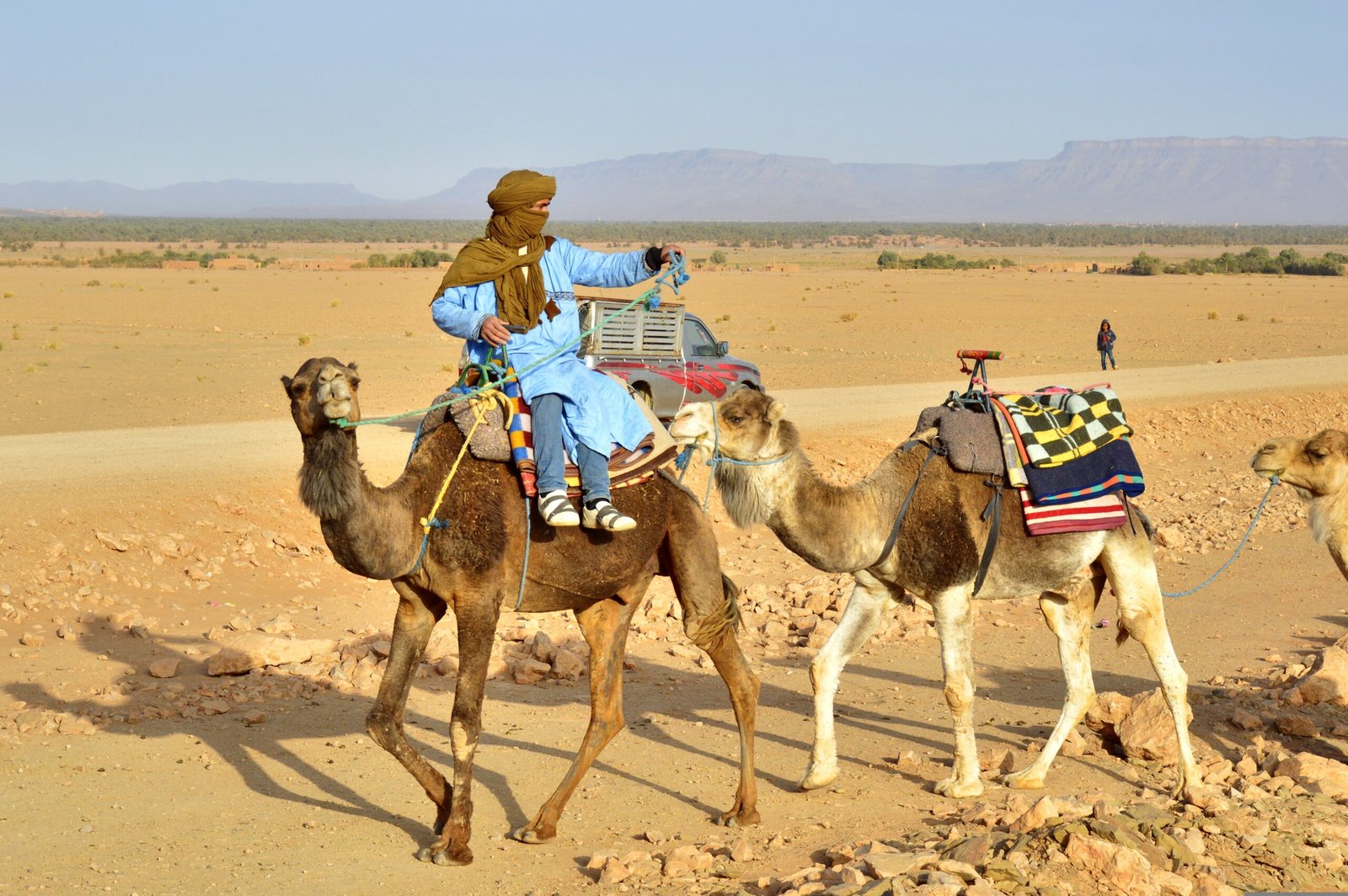
Continue on to Erfoud, known its date festival and fossil mining. Herev you can visit a local collective to learn more about yhe process and meet some local artisans. Continue to Erg chebbi,an extensive sea of sand dunes covering an area of 13.5 square miles (35 square km). never stationary, the massive dunes shift and travel depending on the changing wind! Upon reaching Merzouga, switch gears and ride your camel through the dunes to your already-prepared-for-you camp. climb a nearby sand dune to watch the sunset before returning to camp for a delicieus dinner, relaxing by tha campfire.
catch the sunrise before renting a sandboard to test your skills. leave the dunes and head to Khemliya to experience a traditional Sahara village-its people originally from Mali. Continue west to pass through a ddramatic gate into Rissani. A market town, Rissani holds a livestock auction and is home to a ''donkey parking lot'', a site worth ( hearing) and experiencing! Make oyur way to the desert town of Tinerhir before reaching the 984 feet (300 m) deep Todra Gorge. You will have time to explore the gorge and relax in the cool water of the shallow Todra River.
Travel through the Valley of athousand kasbahs. Though many kasbahs are now in disrepair, local famillies still live in some of them. You may even come across nomads herding thier animals. Head west to Kela'a M"gouna. Known for its Festival des Roses, here you can see extensively cultivated farmland bordered with fragrant rose bushes. Continue west to Ouarzazate, a gateway to the Sahara Desert made populer by the film industry. Join a studio tour and discuver how the nearby desert landscapes have been featured in many films.
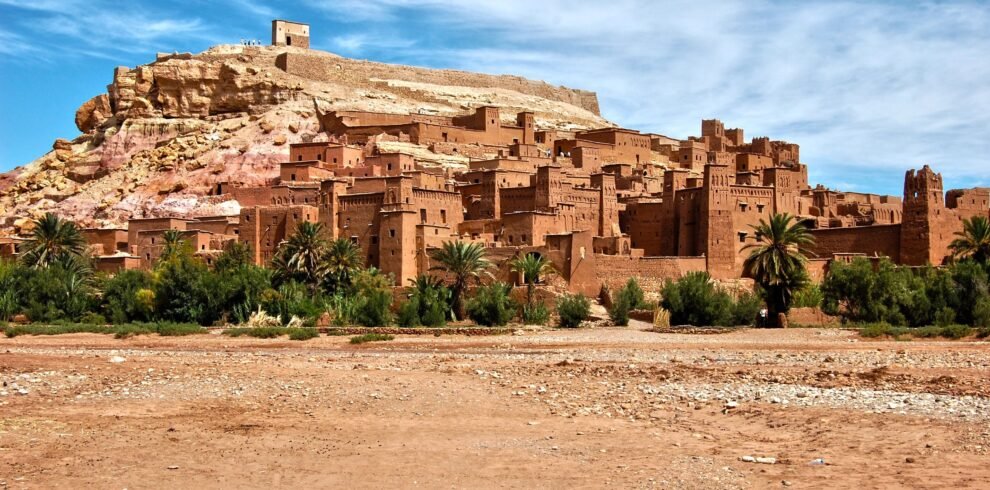
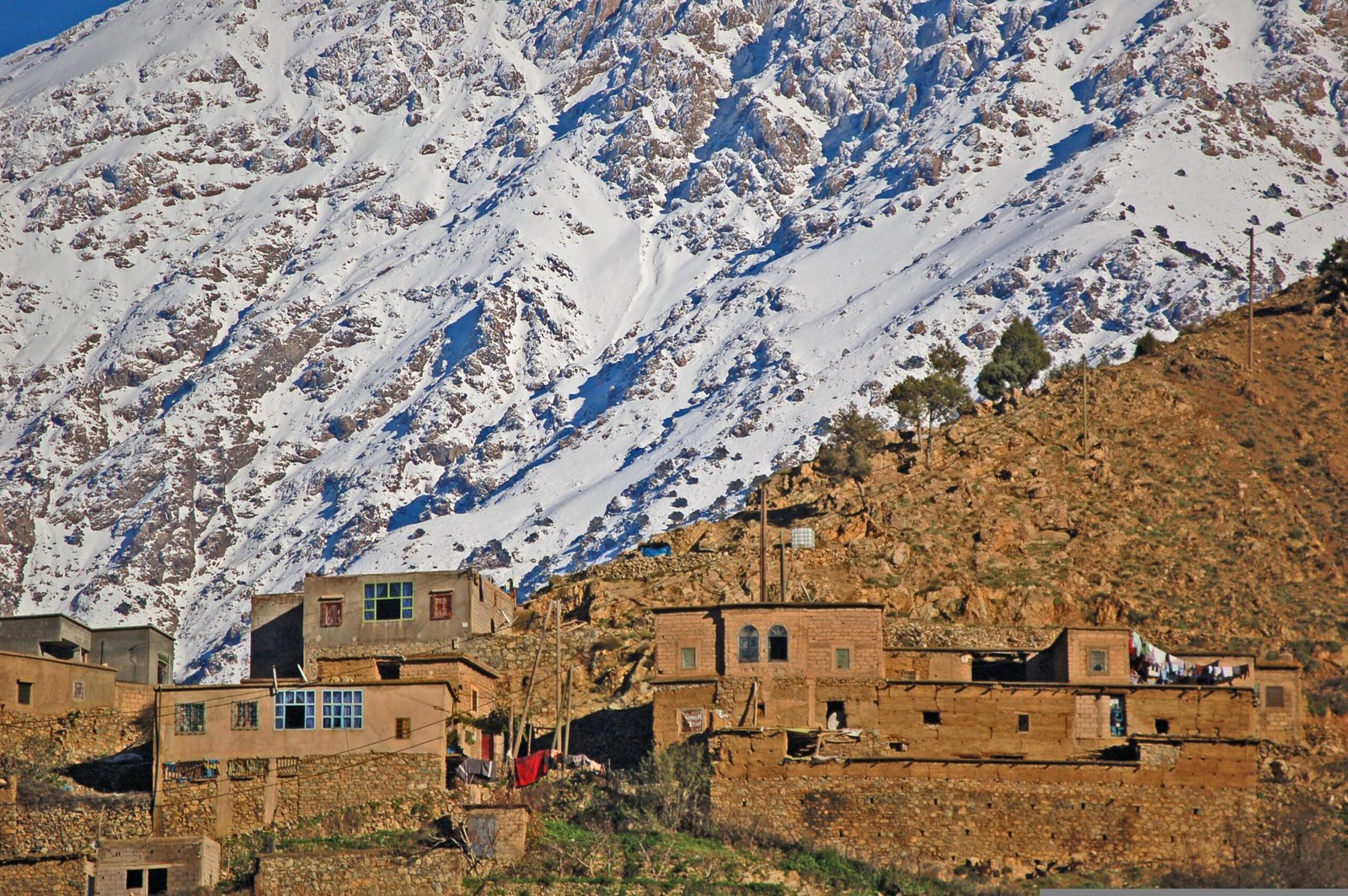
Travel to nearby Ait Benhddou . A UNESCO World Heritage site, Ait Benhaddou is believed to date from the 11th century during a time when it held an important position along the trans-Saharan trade route between Marrakech, Ouarzazate, and the southern desert. Folow the narrow streets up to the Granary for a view of the surrounding landscapes. from there, ascend the High Atlas mountain range and look out for the highest peak, Mount Toubkal (13,671 feet of 4,167 m). Stop near the top of the Tizi n'Tichka pass (7,415 feet or 2,260 m) to enjoy the views over the mountain range.
As you descend the High Atlas, you will notice a dramatic change in the climat and landscape. Soon you will be part of the noise and clamor of Marrakech. After a long day on the road, settle into your hotel and spend the rest of the afternoon as you like. In the early evening, the main square-and busiest square in all of Africa -Jemaa el-Fna, comes olive with musicians, performers, snake charmers, games, and food stalls, a catch-all of entertainment. If you want to enjoy the spectacle from a distance, choose one of the many cafes surrounding the square and enjoy ameal
Nichnamed the"Red CIty" for its red sandstone walls and building, Marrakech was once an important trading capital for Atlas mountain tribes and remains an exciting former imperial city. Begin exoloring Marrakech's ancient medina, starting with the koutoubia Mosque and Gardens. though the mosque cannot be entered by non-muslims, it's worth checking out its 12th century foundations and 253 feet (77 m) minaret. Visit the fountains and pools in the adjoining garden.
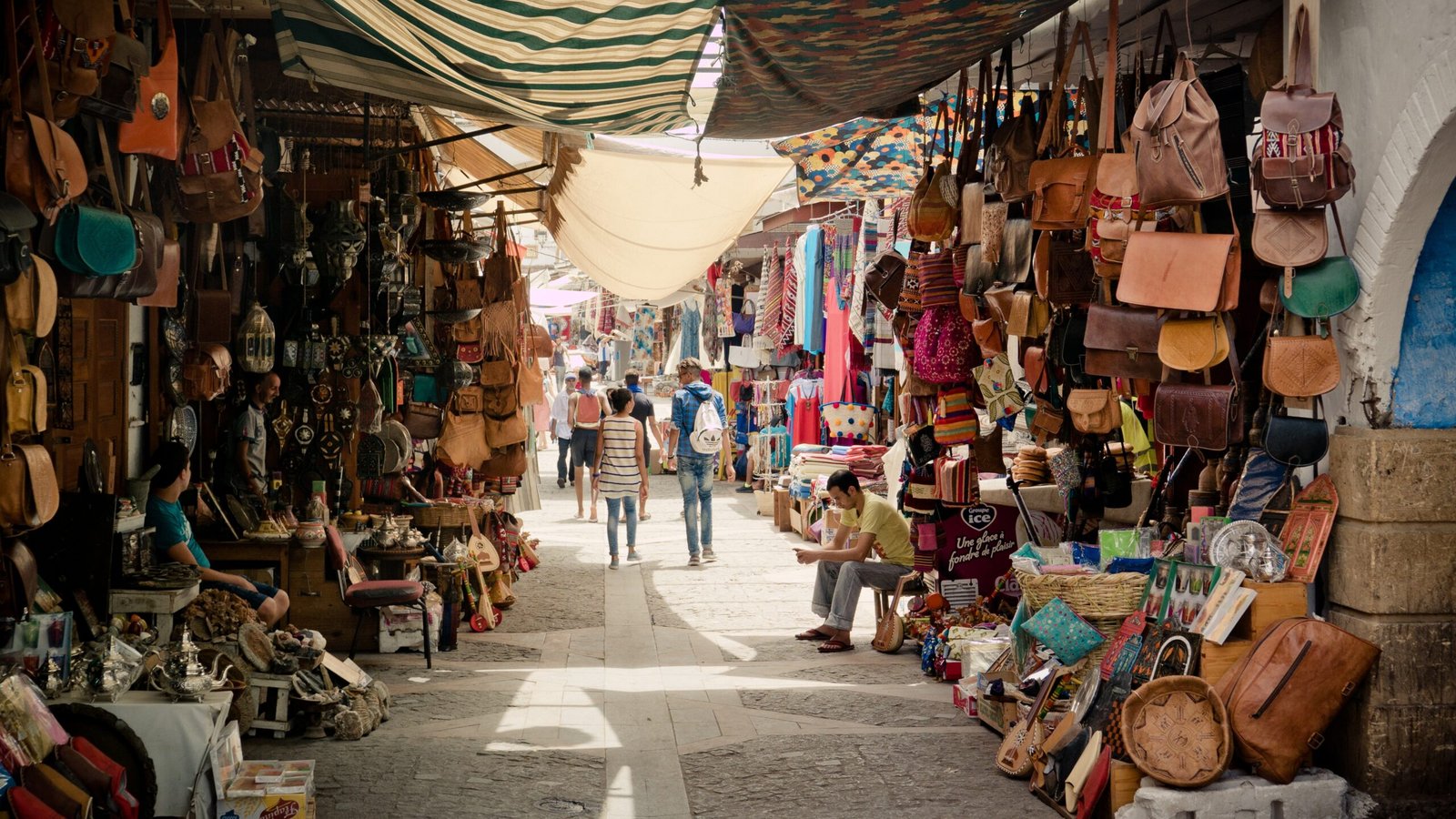
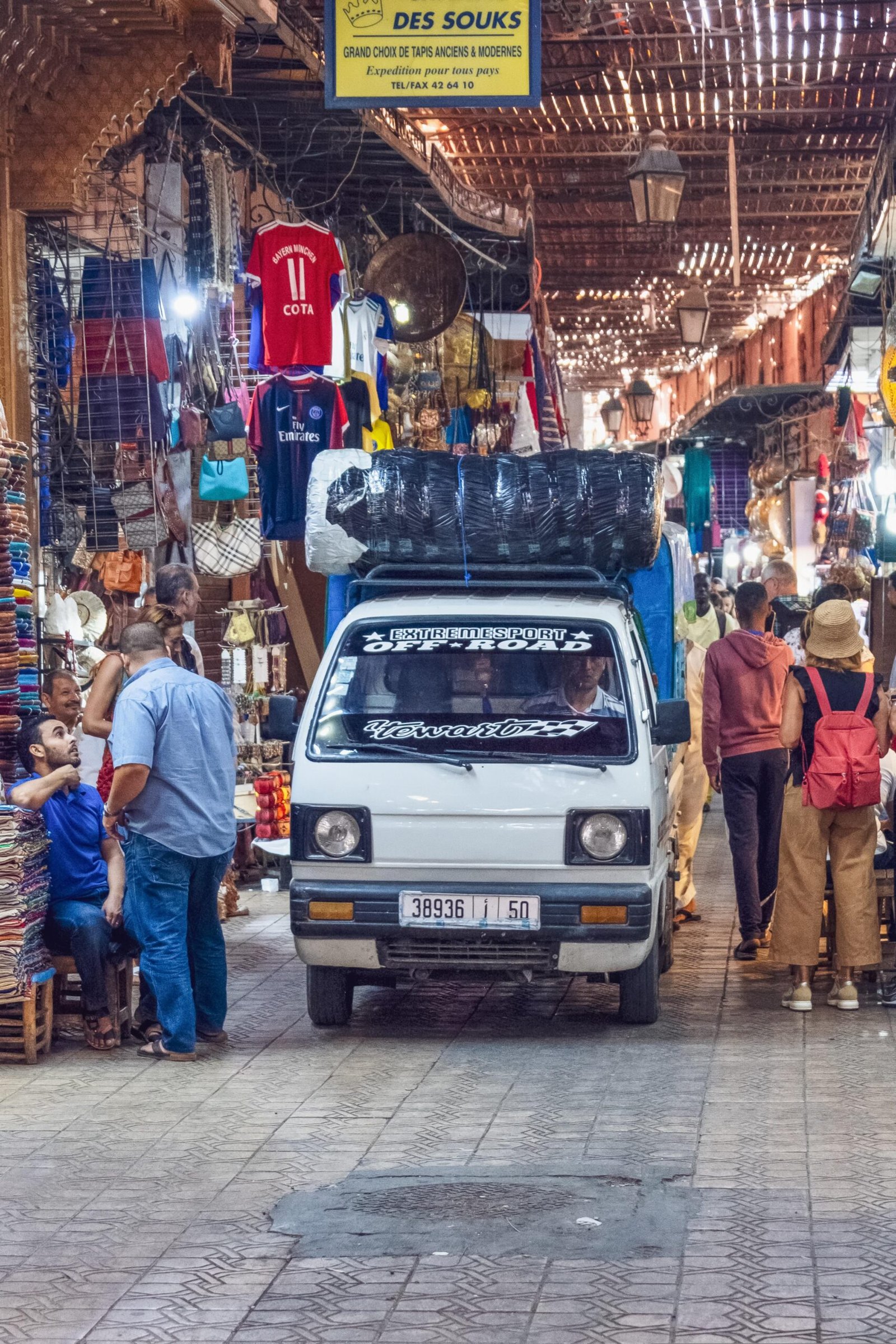
Indulge your senses an you explore the complicated labyrinth of souks, tucked behind ordinary restaurants and shops. Check out Souk el Attarin, Souk Chouari, and Souk Smata for a selection of spices, woodwork, and babouche (traditional Moroccan slippers). Visit Souk des Tienturiers or the dyer' souk to see how cloth and yarn are dyed using traditional methods. Next admire the fine example of Moroccan Islamic architecture of the Ben youssef Madrasa, a 16th- century Koranic school, and note the ornate detail of its interior: carved cedar ceilings, sculpted plaster, and zellij tiling.
head to the airport in evening for your departure flight.